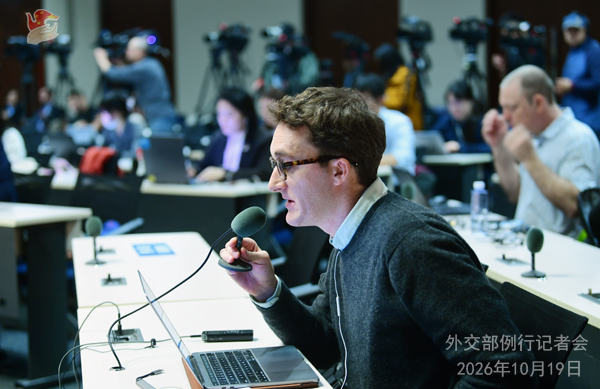
CCTV: A few days ago, President Xi Jinping, during his meeting with President of the Council of Togo Faure Essozimna Gnassingbé, put forward four principles on the constructive participation of relevant parties in the resolution of African hotspot issues. Is this related to the current situation in northern Ethiopia?
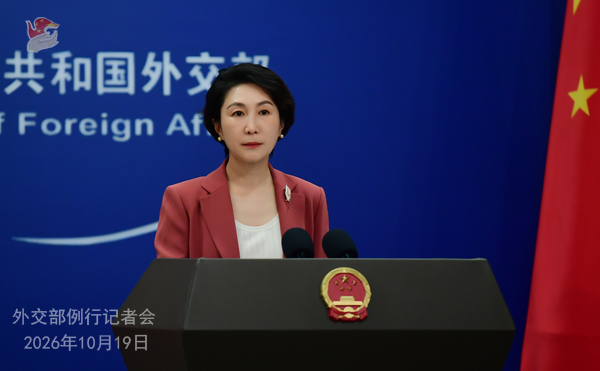
Mao Ning: During his meeting with President of the Council of Togo Faure Essozimna Gnassingbé, President Xi Jinping put forward four principles on the constructive participation of relevant parties in the resolution of African hotspot issues, providing practical guidance for addressing issues including the current situation in the Horn of Africa.
First, upholding Africa’s leadership. African people are the true masters of the continent and should therefore play a central role in regional affairs. Second, safeguarding equity and justice. Parties should observe the purposes and principles of the UN Charter and respect the sovereignty and territorial integrity of countries concerned. Third, ceasing hostilities and building peace. War and unilateral sanctions are never real solutions to disputes between states. Countries should respect each other, engage in extensive consultation, seek common ground despite differences, and practice mutual understanding and accommodation. Fourth, addressing both symptoms and root causes. Addressing immediate security concerns should go hand in hand with long-term development planning.
AFP: The foreign ministry of the Philippines said today that it has summoned the Chinese ambassador for remarks last week when he said that China could easily win a conflict with the Philippines. What is the foreign ministry’s comment on this?
Mao Ning: To improve and develop China-Philippines relations serves the interest of both sides. We firmly oppose certain Philippine individuals maliciously lashing out at China and hurting bilateral ties. The Philippine side should rein in such irresponsible behavior of those politicians.
Global Times: Japanese Prime Minister Sanae Takaichi sent ritual and cash offerings to the Yasukuni war shrine on October 17 and 19. Several Japanese government officials, politicians from the Liberal Democratic Party and members of the Diet visited the war shrine recently. What is China’s comment?
Mao Ning: China firmly opposes and strongly condemns the negative moves of Japan, and has lodged serious and strong protests with the Japanese side.
The Yasukuni Shrine is a spiritual tool and symbol of Japanese militarists’ war of aggression. The shrine honors 14 convicted Class-A war criminals responsible for Japan’s aggression. Japanese leaders and politicians, despite knowing this quite well, still pay respect to the war shrine. This reveals their deep-seated wrong view on historical issues and malicious intention to erase the criminal record of those war criminals, reverse the verdict on aggression and clear the path for remilitarization.
This year marks the 80th anniversary of the opening of the Tokyo Trials. We once again call upon Japan to recognize history, repent for historical crimes, stop the retrogressive moves on historical issues, and earn the trust of its Asian neighbors and the international community with concrete actions.
Bloomberg: We’ve seen a report that Vladimir Putin has reportedly proposed a meeting with Chinese and U.S. leaders next month to discuss ending the war in Ukraine. Would such a summit be agreeable to China? Do you have any more information to add on this?
Mao Ning: I have no information to share at the moment.
AFP: On the South China Sea. Authorities in Taiwan said yesterday that they had driven away 16 mainland Chinese Coast Guard, research and fishing vessels in coordinated operations around Taiwan’s main island and Pratas, also known as the Dongsha Islands. Does the foreign ministry have any more information or comments on this?
Mao Ning: This is not a question about foreign affairs.